
SDA & the NDIS

Specialist Disability Accommodation,
explained simply.

Not long ago, thousands of Australians with disability had little say in where they lived - young people placed in nursing homes far too early, adults still living with ageing parents who could no longer support them, or stuck in unsuitable public housing. Across the country there was a shortfall of over 12,000 accessible homes. SDA was introduced in 2016 to change that: dedicated NDIS funding to build homes designed around disability, so people can live with real choice, dignity and independence. That belief is exactly why EnableX exists.

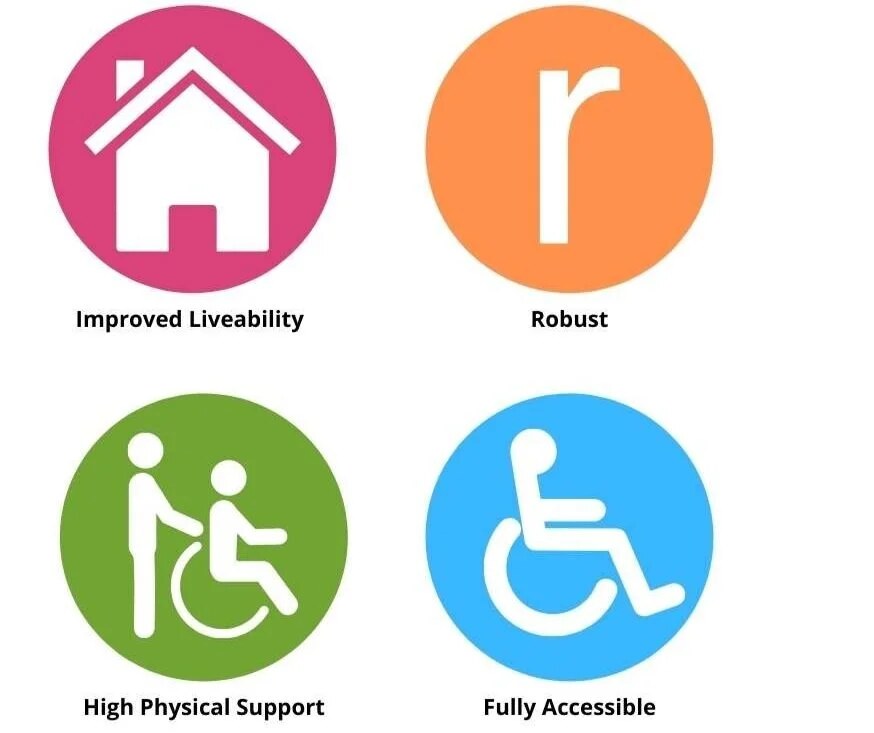
The four SDA design categories - Improved Liveability, Robust, High Physical Support and Fully Accessible
What is SDA? - a young person in a wheelchair

The basics

What is SDA?

Specialist Disability Accommodation (SDA) is part of the NDIS - a government-funded scheme that helps eligible Australians with disability live in housing that’s genuinely built for their needs. Instead of making do with a standard home, the government funds purpose-built, accessible homes with the design features and assistive technology that make everyday life easier, safer and more independent.

Importantly, SDA is funding for the home itself - the bricks and mortar. The day-to-day support you receive inside the home (like SIL) is funded separately. At EnableX, we design, build and own our SDA homes, and pair them with hand-picked support teams.

Design categories

The four types of SDA

Every SDA home is built to one of four design standards, matched to the level of support a person needs.

Improved Liveability

Improved Liveability

Best suited to: people with sensory, intellectual or cognitive disability - for example autism, Down syndrome or vision impairment.

Homes feature better lighting and luminance contrast, clear lines of sight, simple layouts and easy wayfinding, plus a calmer, lower-stimulation feel that supports independence and confidence.

Fully Accessible

Fully Accessible

Best suited to: people with significant physical disability - for example wheelchair users, or people living with cerebral palsy, MS or spinal cord injury.

Step-free access throughout, wider doorways and hallways, level thresholds, height-adjustable benches, and fully accessible bathrooms and kitchens with plenty of turning space.

Robust

Robust

Best suited to: people who need a very durable, secure home - for example some people with autism and complex support needs, or an acquired brain injury, who may experience behaviours of concern.

Impact-resistant walls, doors, windows and fittings, secure yet homely design, and layouts that reduce risk to the resident and the people around them.

High Physical Support

High Physical Support

Best suited to: people with very high physical support needs - for example high-level quadriplegia, advanced MS or motor neurone disease, or severe cerebral palsy.

Ceiling hoists, backup power, structural provision for assistive technology and ventilators, generous circulation space, and provision for on-site overnight support.

Am I eligible?

Who SDA is for

SDA is for a relatively small number of NDIS participants - generally those with an extreme functional impairment or very high support needs. To live in an SDA home, SDA usually needs to be included in your NDIS plan.

  • You’re an NDIS participant
  • You have extreme functional impairment or very high support needs
  • SDA is (or could be) included in your plan

Not sure? That’s completely normal - and it’s exactly the kind of thing we can help you figure out.

How it’s funded

The money side, simply

Here’s the reassuring part: the government covers the vast majority of the cost. If SDA is in your plan, the NDIS pays the SDA amount for your home directly to us.

Your part is small - just a reasonable rent contribution set by the NDIS, usually a modest portion of the Disability Support Pension plus Commonwealth Rent Assistance. In other words, it’s much like the everyday rent most people pay - often for far more than you’d get renting privately. We’ll walk you through the exact numbers, with no surprises.

The national picture

SDA in Australia, by the numbers

The need for well-designed, accessible homes is real - and growing. Here’s where things stand across the country.

13,143SDA homes built or in the pipeline
~16,000New-build SDA homes needed by 2032
~3,270Shortfall still to be built by 2032

Where people are now

Too many are still waiting for the right home

Thousands of people who have SDA funding and need a purpose-built home are still living somewhere that doesn’t suit them - including hundreds in aged care and hospitals, far from the life they want. Every new home changes that for someone.

~11,000In group homes & legacy properties
911In aged care - many far too young
1,224In hospitals, ready to move on

State by state

Funded participants vs homes available

In every state, the number of people funded for SDA far outstrips the homes actually built. The bar shows how much of the need is currently met.

New South Wales

Participants7,737
Homes built2,913
38% of need met

Victoria

Participants7,033
Homes built2,739
39% of need met

Queensland

Participants4,089
Homes built3,238
79% of need met

South Australia

Participants2,397
Homes built944
39% of need met

Western Australia

Participants1,792
Homes built791
44% of need met

Tasmania

Participants508
Homes built126
25% of need met

Northern Territory

Participants292
Homes built149
51% of need met

ACT

Participants333
Homes built106
32% of need met

Looking ahead

The NDIS forecast for 2032

1,017,522Australians the NDIS is expected to support by 2032
~30,000May be funded for SDA - around 3% of participants
~3,270Extra new-build SDA homes needed to meet that demand

Sources: NDIS statistics as at 30 September 2025; NDIS SDA Demand Forecasts (June 2024); NDIS Quarterly Report to Ministers (September 2025).

Good questions

Frequently asked

What’s the difference between SDA and SIL?

SDA is the home - the specially designed, accessible building. SIL (Supported Independent Living) is the support you receive while living there - help with everyday tasks, delivered by a support team. They’re funded separately, and you can have one without the other.

Do I need SDA in my plan to live in an EnableX home?

Generally, yes - SDA homes are funded through SDA in your NDIS plan. But if you have NDIS funding and aren’t sure whether you have (or could get) SDA, please get in touch. And if you don’t have SDA yet but think you might qualify, we can also help guide you through the process of getting it added to your plan. We’ll help you understand your options.

Can I choose my housemates?

Finding the right fit matters enormously. We take compatibility seriously and involve you (and the people who support you) in the process, so everyone in the home feels comfortable and at ease.

What will it cost me?

Less than most people expect. The government (NDIS) pays the large SDA amount for the home - your part is just a small, set rent contribution, usually a modest portion of the Disability Support Pension plus Commonwealth Rent Assistance. It’s similar to everyday rent, for a home built especially for you. We’ll walk you through the exact numbers clearly, with no surprises.

Can I bring my own support team?

Your supports are yours to choose. We hand-pick the SIL and Support Coordination teams we work with because our residents deserve top-notch support - but we’ll always work with you on what suits you best.

Where are your homes?

We build in Victoria and Queensland. Our newest home is in Mount Duneed (Geelong), with more under way in Craigieburn (Melbourne) and Arana Hills (Brisbane).

How do I get started?

Just reach out - a quick call or message is all it takes. We’ll answer your questions, help you understand SDA, and if it’s a fit, arrange a time to show you a home.

We’re here to help

Still have questions about SDA?

There’s no such thing as a silly question. Reach out and we’ll happily talk it through - no pressure, ever.